An Auger Conveyor For Sale can look simple: a steel trough, a rotating screw, and a motor. Yet its price depends on details that are easy to miss. Capacity, screw diameter, conveyor length, material abrasiveness, moisture, and required controls all affect the final quotation. A unit moving dry grain through a short, straight line is not comparable to one handling damp, abrasive material across a longer route.
The Conveyor Equipment Manufacturers Association’s ANSI/CEMA 350 standard provides engineering guidance for screw conveyor design and application. It is useful for comparing specifications, but it is not a price list. Buyers should request a quotation that separates the conveyor, drive, inlet and discharge arrangements, controls, installation, and freight. Ask for the rated capacity and operating conditions in writing. Small details matter.
No source articles or verifiable expert quotation were provided, so I cannot responsibly attribute a statement to a named industry specialist. That matters: an invented quote would weaken trust, especially in a purchasing guide. Treat unusually low offers with care. Check material grade, motor rating, guarding, warranty, and delivery terms before comparing totals. A lower purchase price may still mean a poor fit—or costly changes later. The right comparison starts with the same duty, not the same headline price.
What Is an Auger Conveyor and How Does It Work?
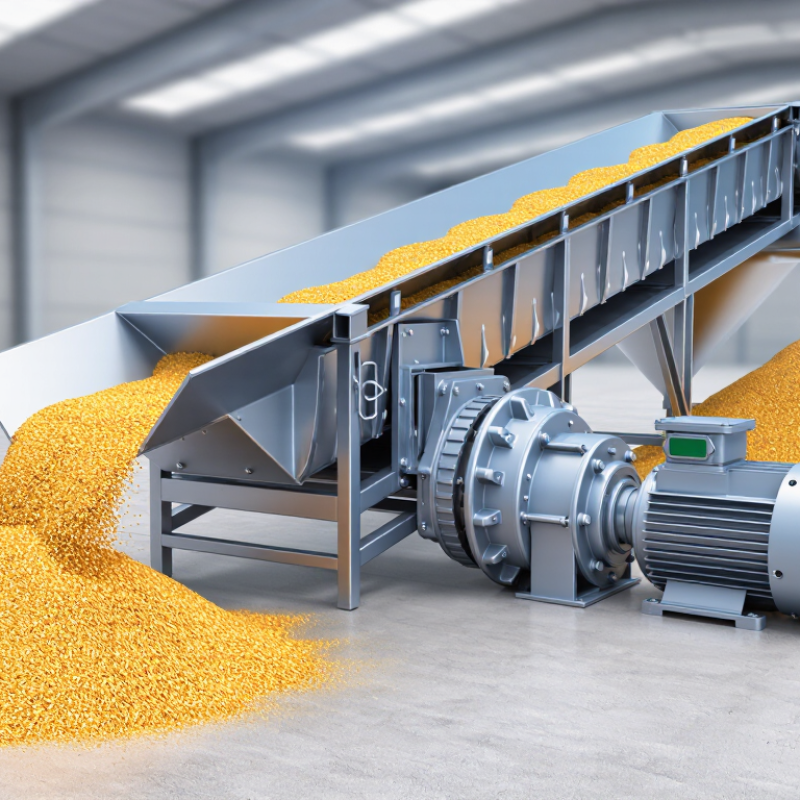
An auger conveyor, also called a screw conveyor, moves bulk material with a rotating helical blade inside a tube or trough. Material enters through an inlet, then the turning flights push it toward the discharge point. It can handle grain, powders, and pellets over short, controlled routes. Simple, but not effortless.
The conveyor’s capacity depends on screw diameter, pitch, rotational speed, material flow, and how full the trough runs. CEMA’s Screw Conveyor Engineering Guide uses these factors in equipment selection; a design suited to dry grain may perform poorly with damp, sticky material. In operation, watch for uneven feeding, rising motor load, unusual vibration, or material buildup. These are practical clues, not a substitute for checking the manufacturer’s operating limits.
Power use also matters when comparing equipment. The U.S. Department of Energy’s 2014 motor-systems assessment reports that motor-driven systems account for about 54% of U.S. manufacturing electricity use. That figure covers many systems, not auger conveyors alone, but it shows why drive sizing and operating hours deserve attention. For a purchase estimate, specify the material, required capacity, conveying length, incline, and duty cycle. Price varies with these details. Small oversights matter. A quoted capacity may not match real conditions.
What Types of Auger Conveyors Are Made in China?
Chinese manufacturers produce several auger conveyor designs for different materials and plant layouts. Horizontal screw conveyors move grain, flour, plastic pellets, and other bulk solids along a level route. They commonly use a U-shaped trough for easier access or a sealed tube when dust control matters. Simple, but not interchangeable.
Inclined auger conveyors lift material between process stages. Their capacity can change with the angle, screw speed, and material flow, so a catalogue rating alone may not predict performance. Flexible screw conveyors use a rotating spiral inside a polymer tube, making them useful where equipment must bend around obstacles. They are often suited to powders and light granules, though abrasive materials can wear the tube faster.
For wet, sticky, or stringy materials, manufacturers also offer shaftless screw conveyors. Without a central shaft, the open spiral can reduce material wrapping, but it still needs suitable trough liners and regular inspection. Compact screw feeders meter material into mixers, packaging lines, or other equipment. Stainless-steel models are available for applications requiring frequent washdown; carbon-steel versions may suit less demanding environments. Details matter. Before comparing prices, buyers should check conveying distance, required capacity, inlet size, material properties, and cleaning access. A small mismatch can become a maintenance problem.
China Auger Conveyor Types and Indicative Prices
Illustrative price ranges for standard, small-to-medium units; actual quotations vary with capacity, length, material, motor, and customization.
Common types include flexible, U-trough, tubular, shaftless, and vertical screw conveyors. The bars show approximate equipment price bands in USD, not a fixed market price or supplier quotation.
What Factors Affect Auger Conveyor Prices in China?
China Best Auger Conveyor for Sale: What Is the Price?
Auger conveyor prices in China depend on more than the conveyor’s length. Capacity, screw diameter, and material thickness all affect the cost. A unit moving dry grain may need a simpler build than one handling damp, abrasive material. Stainless steel, wear-resistant liners, and sealed bearings can raise the initial price, but may suit demanding conditions better. There is no reliable single price without a clear specification.
The drive system matters, too. Motor power, gearbox ratio, speed controls, and the required incline influence both equipment and operating costs. A long conveyor with several support points may need extra fabrication and stronger components. Ask suppliers to specify material grade, throughput assumptions, motor details, and included accessories. I would be cautious about comparing quotes that omit these items; the cheapest figure may leave important costs unclear. Installation, packing, and freight can also change the final delivered price.
Tips: Share the material, target capacity, conveyor length, and operating hours when requesting a quote. Ask for a written breakdown. Small details, such as a dusty loading point, can affect sealing and maintenance choices. Recheck the specifications before ordering.
China Best Auger Conveyor for Sale What Is the Price? - What Factors Affect Auger Conveyor Prices in China?
| Conveyor Type |
Typical Configuration |
Indicative China Price (USD) |
Common Applications |
Main Price Considerations |
| Small tubular screw conveyor |
Approximately 2–4 m long; carbon-steel tube; basic motor and gearbox |
$500–$1,800 |
Powders and granules in small production lines |
Length, tube diameter, motor power, and whether a hopper or inlet is included |
| Standard horizontal screw conveyor |
Approximately 4–8 m long; 100–250 mm screw diameter; carbon-steel construction |
$1,200–$5,000 |
Grain, flour, feed, cement, and other bulk materials |
Capacity, screw diameter, conveyor length, drive arrangement, and fabrication thickness |
| Inclined screw conveyor |
Typically 3–8 m long; inclined trough or tube; drive sized for the elevation and load |
$1,800–$7,000 |
Moving bulk material to an elevated mixer, silo, or processing line |
Inclination angle, lift height, material flowability, and required throughput |
| U-trough screw conveyor |
Openable trough with cover; carbon steel; inspection and cleaning access |
$1,500–$6,000 |
Industrial conveying where routine inspection or cleaning is needed |
Trough dimensions, cover design, supports, wear liners, and access-door quantity |
| Stainless-steel screw conveyor |
Product-contact parts in stainless steel; finish and grade specified to suit the application |
$3,000–$12,000+ |
Food, chemical, and other applications requiring corrosion resistance or cleanability |
Stainless-steel grade, contact-part coverage, surface finish, welding quality, and cleaning features |
| Flexible screw conveyor |
Flexible conveying tube with rotating helical screw; portable or fixed installation |
$1,000–$5,500 |
Powders and small granules conveyed around equipment or between nearby stations |
Tube length and diameter, screw material, bends, motor specification, and feed/discharge accessories |
| Heavy-duty or custom screw conveyor |
Engineered to order for larger loads, abrasive materials, unusual layouts, or special duty |
$5,000–$20,000+ |
Large-scale plants and demanding bulk-material handling systems |
Capacity, duty cycle, shaft and flight design, abrasion protection, engineering, and site-specific requirements |
|
Price guide: These are indicative equipment-only ranges for common configurations manufactured in China, not supplier quotations. The actual price depends on the final specification and order quantity. Confirm currency, Incoterms, freight, installation, taxes, and commissioning separately; export packing and shipping are commonly quoted as additional costs.
|
How Can Buyers Compare Auger Conveyor Suppliers?
China Best Auger Conveyor for Sale: What Is the Price?
Buyers should compare auger conveyor suppliers by performance, not only by quotation. Ask each supplier for rated capacity, screw diameter, conveying distance, speed, incline, and motor power. Request a material test using your actual grain, powder, or granules. Test it wet. A supplier avoiding this test deserves careful questioning.
The International Energy Agency reports that motor-driven systems consume about 53% of global electricity. Therefore, compare motor efficiency, gearbox losses, startup current, and control options. A cheaper conveyor may consume more power every working hour. Calculate total cost over five years, including electricity, wear parts, cleaning, installation, and downtime. Numbers matter.
CEMA guidance recommends checking loading, shaft design, flight thickness, bearing protection, and guarding. Ask for drawings, inspection records, material certificates, and a clear warranty. Compare delivery time for bearings, couplings, and replacement flights. One practical mistake is accepting a high capacity based on laboratory conditions. Dust, moisture, sticky material, and steep angles can reduce output sharply. I have seen buyers focus on stainless steel, yet ignore poor sealing around the inlet. That decision needs reconsideration. A reliable supplier should explain assumptions, show test results, and state what the quoted price excludes.
Reference: International Energy Agency, Energy Efficiency 2017; Conveyor Equipment Manufacturers Association, Screw Conveyors for Bulk Materials.
What Should You Check Before Purchasing an Auger Conveyor?
China Best Auger Conveyor for Sale: What Is the Price?
What Should You Check Before Purchasing an Auger Conveyor?
When comparing a China auger conveyor for sale, purchase price is only one part of the decision. Start with the material. Check its moisture, density, particle size, temperature, and abrasiveness. A damp powder may bridge inside the tube, while sharp particles can wear the flight quickly. Ask for a capacity test using material similar to yours, not only water or empty running.
Measure the required length, height, and incline carefully. These details affect motor power, screw diameter, and feeding stability. Inspect the flight thickness, shaft support, bearing protection, and housing material. For food, chemical, or dusty applications, confirm the cleaning method and sealing design. Small inspection doors can save hours during maintenance. They can also create leakage if poorly fitted.
Do not judge by price alone. Request drawings, motor data, spare-parts lists, warranty terms, and delivery details in writing. Check emergency stops, guards, electrical protection, and applicable safety documentation. A lower quotation may exclude installation or testing. That is easy to miss. Even a careful checklist can overlook seasonal moisture changes. Recheck the conveyor during both normal and peak production conditions.
FAQS
Horizontal models move material along level routes. Inclined models lift it between process stages. Flexible designs bend around obstacles, while shaftless units can handle sticky or stringy materials. Compact feeders meter material into mixers or packaging lines.
A shaftless conveyor may reduce material wrapping because it has no central shaft. Check the trough liner and inspection access, too. Wet material can still cause buildup.
It may, but abrasive particles can wear the polymer tube faster. Ask about material testing and expected tube life before choosing one.
Share the material, target capacity, conveyor length, incline, inlet size, and operating hours. Mention dust, moisture, or abrasive particles. Small details matter.
Capacity, screw diameter, steel grade, and material thickness affect cost. Motor power, gearbox ratio, controls, and support points matter as well. Freight, installation, and packing can change the delivered price.
Request matching specifications, including capacity, speed, distance, incline, and motor power. Ask for a test using your actual material. Test it wet. A catalogue rating alone may not predict output.
Estimate electricity, installation, cleaning, wear parts, and possible downtime over several years. Ask for motor details and replacement-part delivery times. I might overlook downtime, too.
Ask for drawings, inspection records, material certificates, warranty terms, and a clear list of included accessories. Check flight thickness, shaft design, bearing protection, guarding, and inlet sealing. Don’t skip the dusty loading point.
Conclusion
An auger conveyor is a material-handling system that uses a rotating helical screw inside a trough or tube to move bulk materials steadily from one point to another. Depending on production needs, China-made models may include horizontal, inclined, tubular, shafted, shaftless, flexible, and customized designs. They can be adapted for powders, granules, and other dry materials while supporting different capacities, lengths, and discharge arrangements.
The price of an Auger Conveyor For Sale depends on screw diameter, conveyor length, motor power, construction material, conveying capacity, automation level, and customization requirements. Buyers should compare suppliers by reviewing technical specifications, manufacturing quality, delivery capability, communication, warranty terms, and after-sales support rather than judging by price alone. Before purchasing, confirm the material characteristics, operating environment, required throughput, installation space, safety features, maintenance access, and compatibility with existing equipment. A clear quotation and complete technical drawing can help prevent unexpected costs and ensure the selected conveyor matches the intended application.