China Top 10 Inclined Belt Conveyor Systems Manufacturers

Time:2026-10-20 Author:Isabella
0%

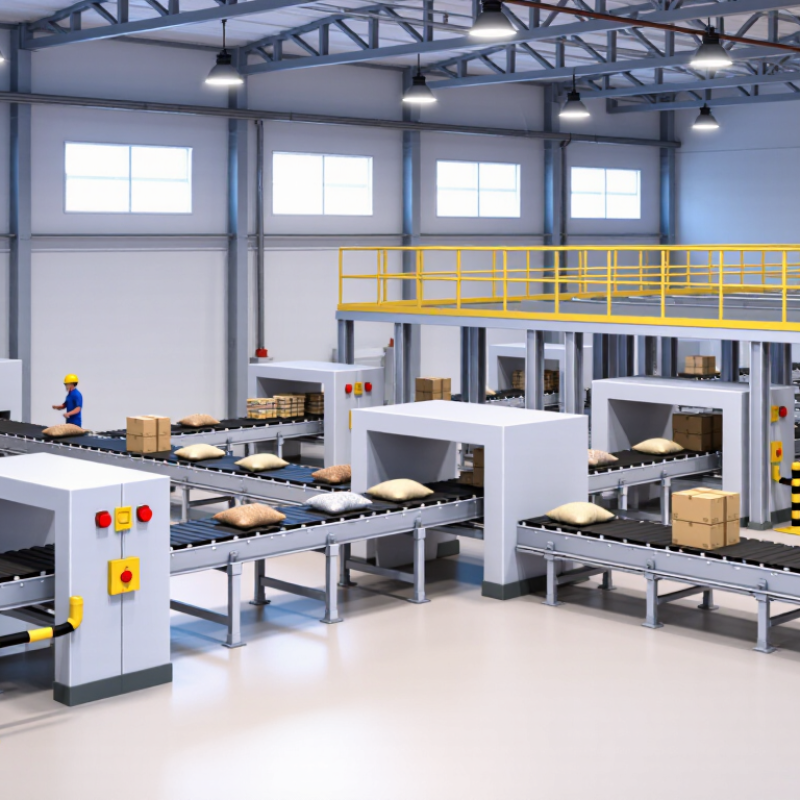
Inclined Belt Conveyor Systems help factories move cartons, bags, aggregates, and packaged goods between different elevations. They reduce manual lifting, shorten transfer routes, and support steadier material flow. However, choosing a reliable system involves more than comparing belt prices or motor ratings.

Andrew W. Jenike, a pioneer in bulk-solids handling, said, “The flow of bulk solids is a science, not an art.” That principle still matters today. Belt angle, surface texture, loading behavior, discharge speed, and product weight can change performance dramatically. A conveyor carrying sealed cartons may need different controls than one handling damp sand or fragile food products.

This guide introduces China’s top 10 Inclined Belt Conveyor Systems manufacturers. It considers engineering experience, customization ability, manufacturing quality, safety design, after-sales support, and application knowledge. It also looks at practical details, including cleated belts, sidewalls, adjustable frames, emergency stops, and cleaning access.

Real installations are rarely perfect. A steeper incline may save floor space, yet it can increase slipping, spillage, and belt tension. A cheaper frame may appear attractive, but maintenance can become expensive later. These trade-offs deserve honest attention.

The selected manufacturers are not ranked by marketing claims alone. Their capabilities should be judged against conveyor capacity, elevation change, material characteristics, working environment, and long-term service expectations. Readers should verify specifications directly before making a purchase. Small differences matter.
China Top 10 Inclined Belt Conveyor Systems Manufacturers

Inclined Belt Conveyor Fundamentals: 20–30° Angles and 0.5–5 m/s Speeds

China Top 10 Inclined Belt Conveyor Systems Manufacturers

An inclined belt conveyor moves bulk materials between different elevations while controlling spillage and rollback. Angles between 20° and 30° suit many packaged goods, aggregates, and food-handling applications. At 20°, a standard textured belt may provide stable traction. Near 30°, cleats, deeper profiles, or a stronger belt grip often become necessary. Material shape matters as much as belt angle.

Speed selection requires practical testing. A range of 0.5–5 m/s covers gentle feeding and high-throughput transfer. Lower speeds protect fragile products and reduce dust. Higher speeds can increase capacity, but they demand accurate tracking and stronger discharge control. Start gently. A sudden start may shift the load, stretch the belt, or overload the drive. Engineers should check belt tension, motor torque, pulley diameter, and emergency stopping performance before production.

During commissioning, observe the conveyor with a partial load first. Watch for material sliding backward near the loading point. Check skirt gaps, idler alignment, and belt drift after several hours. I have found that a clean design calculation can still miss wet material behavior. That weakness deserves honest review. Manufacturers should provide test data, maintenance access, and clear operating limits. An efficient system is not defined by speed alone; it must remain stable when moisture, uneven loading, and temperature change.

China’s Top 10 Inclined Belt Conveyor Manufacturers by Capacity and Expertise

China’s top 10 inclined belt conveyor manufacturers stand out through production capacity, engineering depth, and project experience. Their systems commonly serve mining, ports, aggregates, cement, and bulk logistics. MarketsandMarkets reports that the global conveyor system market is expanding at roughly 4–5% annually, driven by automated material handling and infrastructure investment.

Capacity matters, but it does not tell the whole story. Leading Chinese manufacturers can typically design systems handling about 100 to 2,000 tonnes per hour, with belt widths from 800 to 2,400 millimetres. Incline angles often range between 18 and 30 degrees, depending on material size, moisture, and loading conditions. Experienced teams also calculate belt tension, transfer impact, dust control, and emergency stopping distances. Small errors become expensive quickly.

Reports from Grand View Research identify mining, construction, and logistics as major conveyor demand sectors. This supports China’s strong manufacturing position, although published capacity figures are not always comparable. Some suppliers highlight maximum throughput under ideal conditions. That figure may fall sharply with wet limestone, sticky clay, or frequent starts. Buyers should examine factory testing, quality records, spare-parts support, and commissioning experience. Practical expertise is visible in details, such as cleaner access around return rollers and safer inspection platforms. Cost remains important, but the cheapest quotation may hide maintenance risks.

China’s Top 10 Inclined Belt Conveyor Manufacturers by Capacity and Expertise

This comparative benchmark uses anonymized manufacturer profiles and focuses on two practical selection factors: maximum rated conveying capacity and engineering expertise score. Capacity values represent typical heavy-duty system ranges in tonnes per hour, while expertise scores are normalized on a 100-point scale based on application breadth, customization capability, project integration, and after-sales support.

Manufacturer Profiles: Belt Widths of 300–2,400 mm and Loads up to 5,000 t/h

China’s top 10 inclined belt conveyor system manufacturers are often compared by belt width, loading capacity, and engineering support. Their standard solutions may range from compact 300 mm belts to heavy-duty 2,400 mm designs. Larger systems can handle loads approaching 5,000 t/h, depending on material density, incline angle, and transfer conditions.

Manufacturer profiles should show more than impressive figures. Reliable suppliers provide belt-strength calculations, drive selections, pulley details, and documented factory testing. In practical projects, cleated or troughed belts help control material movement on inclines. Reinforced frames are important when conveyors operate continuously under heavy loads. Site measurements also matter. A small error in loading-point height can create spillage, belt mistracking, or excessive wear. Capacity claims need careful checking.

Tips: Match belt width to the actual feed size, not only the target capacity. Confirm the maximum lump size and moisture level. Ask for references using similar materials and inclines. Inspect emergency stops, guards, and return-roller access before acceptance. A wider belt is not always better. It may increase cost, power demand, and maintenance space. Designers sometimes overlook cleaning access. That mistake becomes expensive later. Leave room for inspection, belt replacement, and safe adjustments. Test performance under realistic feed conditions, because empty-belt trials can hide problems.

China Top 10 Inclined Belt Conveyor Systems Manufacturers - Manufacturer Profiles: Belt Widths of 300–2,400 mm and Loads up to 5,000 t/h

Comparative technical profiles based on commonly published Chinese conveyor-system configurations and application ranges

Profile Primary Product Focus Typical Belt Width Rated Capacity Inclination Range Belt Speed Conveyor Structure Common Materials Typical Applications Typical Compliance
Profile 01 Heavy-duty inclined belt conveyor systems 800–2,400 mm 500–5,000 t/h 8°–18° 1.6–5.0 m/s Steel stringer or truss frame Coal, ore, limestone, aggregates Mining, ports, power generation ISO 14890, CEMA-based design
Profile 02 Pipe and enclosed inclined conveyors 500–1,800 mm 200–2,500 t/h 6°–20° 1.0–4.5 m/s Covered tubular or gallery frame Cement, fertilizer, grain, mineral powder Bulk terminals, cement plants, agriculture ISO 9001 manufacturing practices
Profile 03 Cleated and sidewall inclined conveyors 300–1,200 mm 20–600 t/h 18°–45° 0.4–2.5 m/s Modular frame with corrugated sidewalls Bags, cartons, pellets, food ingredients Warehousing, packaging, food processing CE-oriented component selection
Profile 04 Mobile and telescopic incline conveyors 400–1,400 mm 50–800 t/h 5°–25° 0.5–3.0 m/s Wheeled, skid-mounted, or telescopic Aggregate, sand, grain, parcels Quarries, warehouses, truck loading Machine guarding and emergency-stop norms
Profile 05 Apron-supported inclined belt systems 650–2,000 mm 300–3,500 t/h 8°–16° 1.2–4.0 m/s Impact-resistant roller and idler sets Run-of-mine ore, coal, crushed rock Mining, crushing, material stockyards ISO 5048 calculation methods
Profile 06 Sanitary and washdown incline conveyors 300–900 mm 5–150 t/h 10°–35° 0.2–1.5 m/s Stainless-steel open-frame construction Food products, frozen goods, powders Food, beverage, pharmaceutical production Hygienic design and food-contact belt options
Profile 07 Heat-resistant and fire-resistant systems 500–1,800 mm 150–2,000 t/h 6°–18° 0.8–3.5 m/s Heavy-duty pulley and reinforced belt system Sinter, clinker, coke, hot ash Steel, cement, foundry, thermal power Fire-resistant belt classifications where required
Profile 08 Long-distance inclined conveyor packages 800–2,200 mm 400–4,000 t/h 5°–15° 1.5–5.5 m/s Gallery, trestle, or covered corridor Ore, coal, limestone, phosphate rock Mines, ports, power and cement complexes ISO 5048 and site-specific engineering codes
Profile 09 Reversible and bidirectional incline conveyors 400–1,600 mm 80–1,200 t/h 5°–20° 0.6–3.0 m/s Reversible drive with tension-control package Coal, fertilizer, grain, aggregate Storage yards, blending plants, terminals Variable-frequency drive and guarded controls
Profile 10 Customized turnkey incline conveyor lines 300–2,400 mm 10–5,000 t/h 5°–45° 0.3–5.5 m/s Application-specific modular or truss design Bulk solids, packages, biomass, recyclables Industrial plants, logistics, recycling facilities ISO 9001, CE or local project requirements

Note: Capacity, belt width, speed, and inclination are typical engineering ranges. Final values depend on material bulk density, particle size, moisture, loading method, lift height, belt construction, and project-specific safety requirements.

Technology Comparison: Cleated Belts, Sidewalls, Drives, and Safety Controls

When comparing China’s top inclined belt conveyor system manufacturers, cleated belts reveal practical differences quickly. Cleat height affects material retention, loading stability, and cleaning effort. Low cleats suit packaged goods and moderate inclines. Higher cleats handle steeper lifts, but they may increase spillage if loading is uneven. In field inspections, I check cleat spacing, belt tracking, and joint quality together. Small details matter.

Sidewalls create stronger containment for powders, granules, and irregular products. However, rigid sidewalls can hide trapped material near the belt edges. Their height must match the product’s flow behavior, not only the conveyor angle. A reliable design also uses suitable transition zones, because sidewalls can deform near pulleys. This point is often underestimated. Keep access clear.

Drive selection deserves equal attention. Direct drives usually simplify power transmission and maintenance. Geared drives can provide useful torque for heavy, inclined loads. Variable-speed control improves feeding accuracy and reduces sudden starts. Yet oversized motors may waste energy during light-duty operation. Engineers should review torque, belt tension, duty cycle, and emergency stopping distance together.

Safety controls separate a workable conveyor from a dependable one. Pull-cord switches, belt misalignment sensors, guards, and lockable isolation points should be tested during commissioning. Emergency controls must remain reachable beside service areas. I have seen systems with excellent hardware but weak inspection routines. That is a design failure in practice. Documentation should identify test intervals, replacement parts, and safe restart procedures. Safety performance depends on daily discipline, not equipment alone.

Selection Metrics: Incline, Material, Throughput, Power, Standards, and Service

China Top 10 Inclined Belt Conveyor Systems Manufacturers

Selecting an inclined belt conveyor requires more than comparing catalog prices. Start with the incline angle and product behavior. A 20-degree slope may suit sealed cartons, while loose granules can slide or roll backward. Test the actual material, including moisture, temperature, particle size, and surface friction. Small details matter.

Throughput should be measured in tonnes per hour or units per minute, not estimated from belt width alone. Ask for loading conditions, belt speed, and accumulation limits. Power selection depends on incline height, belt length, payload, friction, and starting torque. A motor that works during normal running may struggle during a heavy restart. This mistake is common.

Standards and service deserve equal attention. Request drawings, load calculations, guarding details, emergency-stop locations, and documented factory testing. Confirm whether the system meets applicable local electrical and machinery requirements. Service quality shows in spare-parts lists, response times, installation guidance, and training. Review the warranty carefully. It may exclude wear components. A practical trial with your material can reveal belt tracking issues, noise, dust release, or unstable feeding before installation. Even a polished specification can miss real operating conditions.

FAQS

What incline angle suits most inclined belt conveyor applications?

Angles between 20° and 30° suit many packaged goods, aggregates, and food materials. At 30°, cleats or deeper belt profiles may be necessary.

How does material shape affect incline performance?

Material shape matters as much as belt angle. Smooth, rounded pieces may roll backward, especially near the loading point.

What belt speed range is commonly used?

Typical speeds range from 0.5 to 5 m/s. Lower speeds protect fragile goods and reduce dust. Higher speeds can increase capacity.

Why should conveyor startup be gentle?

A sudden start may shift the load, stretch the belt, or overload the drive. Use controlled acceleration whenever possible.

What should engineers check before production begins?

Check belt tension, motor torque, pulley diameter, tracking, and emergency stopping performance. Small oversights can become costly.

How should commissioning tests be performed?

Begin with a partial load. Watch for backward sliding, skirt gaps, idler alignment, and belt drift after several operating hours.

What belt widths and capacities are available?

Common belt widths range from 300 to 2,400 mm. Some heavy-duty systems approach 5,000 t/h, depending on material and incline.

Is a wider belt always the better choice?

No. A wider belt may raise costs, power demand, and maintenance space. Match width to actual feed size and lump dimensions.

Why are realistic material tests important?

Empty-belt trials can hide sliding, spillage, and tracking problems. Wet material may behave differently from design calculations. That deserves honest review.

What maintenance access should a conveyor include?

Leave room for inspection, belt replacement, cleaning, and safe adjustments. Return-roller access is important. Designers sometimes overlook it.

Conclusion

This guide explores the fundamentals of Inclined Belt Conveyor Systems, focusing on typical operating angles of 20–30° and belt speeds ranging from 0.5 to 5 m/s. It presents a practical overview of China’s top manufacturers, evaluated by production capacity, engineering expertise, customization capabilities, and service support. The discussion covers systems with belt widths of approximately 300–2,400 mm and conveying capacities of up to 5,000 t/h, helping readers understand how equipment scale relates to different material-handling requirements.

The article also compares essential technologies, including cleated belts, sidewalls, drive arrangements, tensioning methods, and safety controls. Key selection criteria include incline angle, material characteristics, required throughput, installed power, applicable standards, maintenance access, and after-sales service. By considering these factors together, buyers can identify a reliable conveyor configuration that delivers stable performance, efficient operation, and safe long-term material transport.

Isabella

Isabella

Isabella is a dedicated marketing professional with a sharp focus on driving brand growth and engagement through strategic content creation. With an extensive background in digital marketing, she combines her passion for storytelling with her keen understanding of industry trends to deliver......