
China Top Screw Auger Conveyor For Sale Best Supplier?

Time:2026-10-10 Author:Amelia
0%

Choosing a reliable China Screw Auger Conveyor For Sale supplier requires more than comparing online prices. The right conveyor should match your material, capacity, layout, and working environment. In practical installations, a small mismatch can cause frequent blockages, uneven feeding, or unnecessary motor wear. A supplier should explain these risks clearly.

I have seen screw conveyors handling grain, powder, sludge, cement, and recycled materials. Each application needs different flight designs, shaft strength, trough shapes, and sealing methods. Stainless steel may suit food processing, while carbon steel can serve demanding industrial transfer lines. Ask for measurable details, including throughput, conveyor length, inclination, motor power, inlet size, outlet design, and maintenance access.

No supplier is perfect.

A trustworthy manufacturer provides drawings, technical calculations, material options, inspection records, and responsive after-sales support. Factory photos help, but verified production experience matters more. Request videos of similar equipment operating under realistic loads. Also confirm spare-part availability and delivery procedures before placing an order.

The “best” supplier depends on performance, not attractive wording. A lower quotation may exclude the drive guard, control panel, packing, or installation guidance. That mistake can become expensive later. This guide examines China-based manufacturers, product quality, customization ability, communication standards, and long-term service. Some details may still require independent verification, because specifications can change between projects. Careful comparison creates a safer and more dependable purchasing decision.
China Top Screw Auger Conveyor For Sale Best Supplier?

What Is a Screw Auger Conveyor? ANSI/CEMA 350 Definitions and Uses

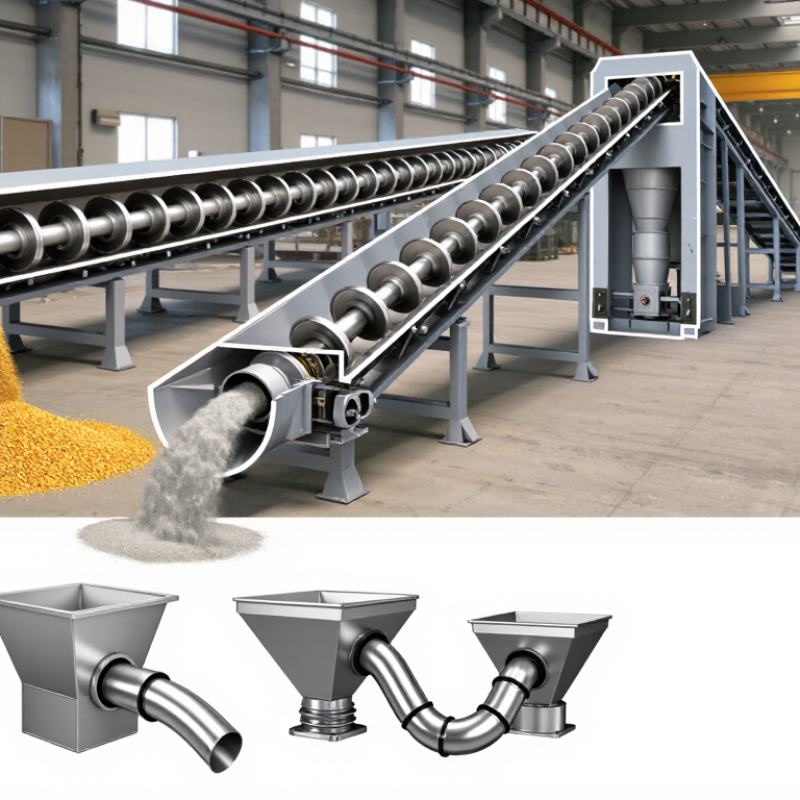
A screw auger conveyor is a mechanical system that moves bulk materials with a rotating helical flight inside a trough or tubular housing. Common materials include grain, cement powder, plastic pellets, ash, and food ingredients. The screw may operate horizontally or on a controlled incline, although capacity usually decreases as the angle increases.

ANSI/CEMA 350 provides recognized terminology, dimensional guidance, and component practices for screw conveyors. It covers parts such as the screw flight, shaft, hanger bearings, trough, inlet, and discharge. These definitions help engineers describe equipment consistently and compare designs accurately. The standard does not create one universal conveyor. Material density, moisture, particle size, temperature, and required capacity still control the final design.

In field inspections, small details often decide reliability. A poorly placed inlet can overload the screw. Excessive clearance may cause material buildup or accelerated wear. Shorter conveyors often use simple supports, while longer units need carefully spaced hanger bearings. Inclined systems require special attention to horsepower and backflow. Sticky products can behave unpredictably. I have seen calculated capacities fail when moisture changed during production. That is an important limitation. A practical specification should state operating conditions, not only the desired tons per hour. Safety guarding, access for cleaning, and suitable materials of construction also deserve early review. An experienced supplier should explain these choices with drawings, calculations, and test data.

ANSI/CEMA 350 screw conveyor capacity calculations commonly use 15%, 30%, and 45% trough-loading reference levels. Lower loading is generally selected for materials that are difficult to convey, abrasive, or prone to buildup, while higher loading is considered only when the material flows reliably and operating conditions permit. Actual capacity also depends on screw diameter, pitch, rotational speed, material bulk density, and loading factor.

How Does It Work? Capacity Formula and Key Design Parameters

China Top Screw Auger Conveyor For Sale Best Supplier?

How Does It Work? Capacity Formula and Key Design Parameters

A screw auger conveyor moves bulk material through a rotating helical flight inside a trough or tube. The flight pushes material forward while the casing controls its path and reduces spillage. Common parts include the screw shaft, flights, bearings, drive motor, inlet, and discharge outlet. Material behavior matters greatly. Dry grain flows easily, but damp powder may bridge above the inlet.

A practical capacity formula is Q = 60 × A × P × n × φ × ρ / 1000. Here, Q is capacity in tonnes per hour, A is the flight area in square meters, P is pitch in meters, n is rotational speed in revolutions per minute, φ is filling ratio, and ρ is bulk density in kilograms per cubic meter. A full trough is rarely appropriate. Many designs use a 15% to 45% filling ratio to prevent overload and uneven flow.

Small details change performance. Larger diameter increases capacity, while higher speed may increase wear and product damage. Inclined conveyors usually lose capacity as the angle rises. Moisture, particle size, abrasiveness, temperature, and required cleanliness should guide material selection. Shaft stiffness also deserves attention, especially on long conveyors. A neat spreadsheet can still mislead. Real testing may reveal buildup, poor feeding, or unexpected torque. Conservative sizing is often safer than chasing the maximum theoretical output.

Which Screw Conveyor Types Match Materials, Loads, and Layouts?

Choosing a screw auger conveyor starts with the material, not the catalog photograph. Dry grain often moves well through a standard shafted conveyor with a trough cover. Powdery materials may need a tubular design to control dust and prevent leakage. Sticky material can bridge inside a tight housing. A larger flight diameter and slower speed may reduce this problem.

Load and distance also change the selection. Heavy minerals, sand, and abrasive pellets usually require stronger flights, thicker surfaces, and suitable wear protection. A shaftless screw conveyor handles sludge, fibers, and other difficult materials with less risk of central-shaft blockage. However, it can consume more power under heavy loading. That detail is easy to overlook.

Layout matters just as much. Horizontal conveyors usually deliver stable capacity with moderate energy use. Inclined models need a suitable pitch, controlled speed, and realistic capacity calculations. Vertical screw conveyors save floor space, but they demand careful feeding and discharge design. In one installation review, an oversized motor did not solve poor feeding; it only increased energy waste. The better correction involved the inlet and operating rate. Measure moisture, bulk density, temperature, and particle size before requesting a quotation. Small testing is wise. An experienced supplier should explain these compromises clearly, provide load calculations, and adjust the design when site conditions prove different from the original plan.

How to Evaluate Chinese Suppliers: ISO 9001, CE, and CEMA Compliance

Choosing a China top screw auger conveyor supplier requires more than comparing prices.

ISO’s 2022 Survey recorded over 1.26 million ISO 9001 certificates worldwide. A certificate helps, but it does not prove excellent conveyor design. Request the certificate number, issuing body, scope, and expiry date. The scope should cover conveyor manufacturing, not only trading or general machinery.

CE marking needs careful checking. It is a manufacturer’s declaration that the equipment meets applicable European safety requirements. It is not a universal quality certificate. Ask for the EU Declaration of Conformity, risk assessment, electrical drawings, guarding details, and test records.

For CEMA compliance, review the selected screw diameter, flight thickness, shaft design, hanger spacing, trough loading, and drive rating against CEMA Screw Conveyors for Bulk Materials guidance. Small omissions can cause large maintenance problems.

Tips: Ask for a video of a running unit. Look closely at bearing seals, weld continuity, inspection doors, and paint coverage. Request two recent export references with similar material and capacity. A factory audit can confirm whether serial numbers match production records. I would also test the actual bulk density and moisture assumptions; supplier data may be incomplete. One mistake remains common: treating paperwork as performance evidence. A witnessed factory acceptance test, with measured capacity, noise, vibration, and motor current, gives stronger evidence.

Cite: ISO Survey 2022; CEMA, Screw Conveyors for Bulk Materials, Second Edition.

How to Verify Performance: Throughput, Power, Testing, Warranty, and Cost

Choosing a China screw auger conveyor requires more than comparing catalog prices. Throughput depends on material density, moisture, particle size, screw diameter, and conveying angle. Ask for a tested capacity in kilograms per hour, not a broad estimate. A machine rated for dry powder may struggle with damp granules. Small details matter.

Power selection should match the real load and starting conditions. Request the motor rating, speed range, gearbox details, and expected energy use. I recommend testing with your actual material whenever possible. During a factory test, check discharge stability, vibration, noise, and residual material inside the trough. Watch the feed point closely. Uneven feeding can create false throughput results.

Ask for test videos, measurement records, and clear acceptance criteria. A reliable supplier should explain how capacity was measured and what errors may affect the result. I have seen attractive quotations omit installation, spare parts, or electrical changes. That creates an inaccurate cost comparison. Review warranty length, covered components, response time, and available replacement parts. A low purchase price may become expensive when seals, bearings, or cleaning labor are ignored. Leave room for doubt. A perfect promise deserves careful verification.

FAQS

What is a screw auger conveyor?

It moves bulk materials with a rotating helical flight inside a trough or tube. Common materials include grain, powder, pellets, ash, and food ingredients.

Can a screw conveyor operate at an angle?

Yes, but capacity usually decreases as the angle increases. Inclined units also need more power and may experience backflow.

Which material details affect conveyor design?

Density, moisture, particle size, temperature, and required capacity all matter. Damp material may behave differently from dry material.

Why can an inlet cause operating problems?

A poorly positioned inlet can overload the screw. Uneven feeding may create unstable flow and misleading capacity results.

What details should a supplier provide?

Request drawings, calculations, test records, motor details, gearbox information, and component specifications. Paperwork alone is not performance evidence.

How can a buyer check real throughput?

Ask for measured capacity in kilograms per hour. Test the conveyor with actual material whenever possible.

What should be observed during a factory test?

Check discharge stability, vibration, noise, motor current, and leftover material inside the trough. Watch the feed point closely.

Why should warranty and spare parts be reviewed?

Seals, bearings, and cleaning labor can increase long-term costs. A low purchase price may become expensive later.

What safety and maintenance features deserve attention?

Review guarding, cleaning access, inspection doors, bearing seals, weld continuity, and paint coverage. Small omissions can create large maintenance problems.

Can a calculated capacity be completely trusted?

Not always. Moisture changes have caused failed estimates in real production. A perfect promise still deserves careful verification.

Conclusion

When searching for a Screw Auger Conveyor For Sale, it is important to understand how this equipment moves bulk materials through a rotating helical flight inside a trough or tube. Based on ANSI/CEMA 350 concepts, screw conveyors are selected for conveying, feeding, mixing, cooling, or elevating materials in many industrial applications. Their performance depends on factors such as material type, bulk density, moisture, particle size, conveyor diameter, screw speed, incline, filling rate, and conveying distance. Capacity and power should be calculated carefully to ensure stable operation and avoid overloading.

Different designs, including horizontal, inclined, vertical, tubular, shaftless, and variable-pitch conveyors, can match specific material and layout requirements. When evaluating Chinese suppliers, buyers should review ISO 9001 quality systems, applicable CE documentation, and evidence of CEMA-based design practices. Before purchase, confirm throughput, motor power, dimensions, material compatibility, factory testing, warranty coverage, spare parts support, and total operating cost. A reliable supplier should provide clear technical data and practical performance verification.

Amelia

Amelia

Amelia is a seasoned marketing professional with a wealth of expertise in our company’s core offerings. With an unwavering passion for driving growth and innovation, she plays a pivotal role in shaping our marketing strategies and enhancing brand visibility. A key aspect of her responsibilities......