
China Top Auger For Conveyor Manufacturers and Suppliers

Time:2026-10-05 Author:Liam
0%

China has become an important sourcing base for conveyor components and bulk material handling equipment. Among these products, Auger For Conveyor systems support the steady movement of powders, granules, and small bulk materials. They are used in agriculture, food processing, chemicals, construction materials, and recycling applications. A suitable auger can reduce manual handling and improve production consistency.

Experienced Chinese manufacturers usually provide customized flights, shafts, housings, inlets, outlets, and drive assemblies. They may work with carbon steel, stainless steel, or abrasion-resistant materials. Material choice depends on moisture, temperature, particle size, and sanitation requirements. These details matter more than appearance.

Good suppliers should explain their design process clearly. They should review conveying capacity, screw diameter, speed, inclination, and motor power before quoting. Reliable factories also use dimensional inspection, welding checks, surface treatment, and trial assembly. Ask for drawings, test records, material certificates, and installation guidance. Documentation is not exciting. It prevents expensive misunderstandings.

Some suppliers are strong in custom engineering but weaker in communication. Others respond quickly but offer limited technical depth. No supplier is perfect. Buyers should verify workshop capability, production experience, export records, and after-sales support. Site photos can help, but independent checks are better. A practical supplier will discuss wear points, cleaning access, maintenance intervals, and possible conveying limits.

This guide introduces leading China Auger For Conveyor manufacturers and suppliers. It focuses on product quality, engineering experience, customization, delivery reliability, and technical service. The goal is not to promote the loudest claim. It is to help buyers compare realistic options and choose equipment suited to their actual operating conditions.
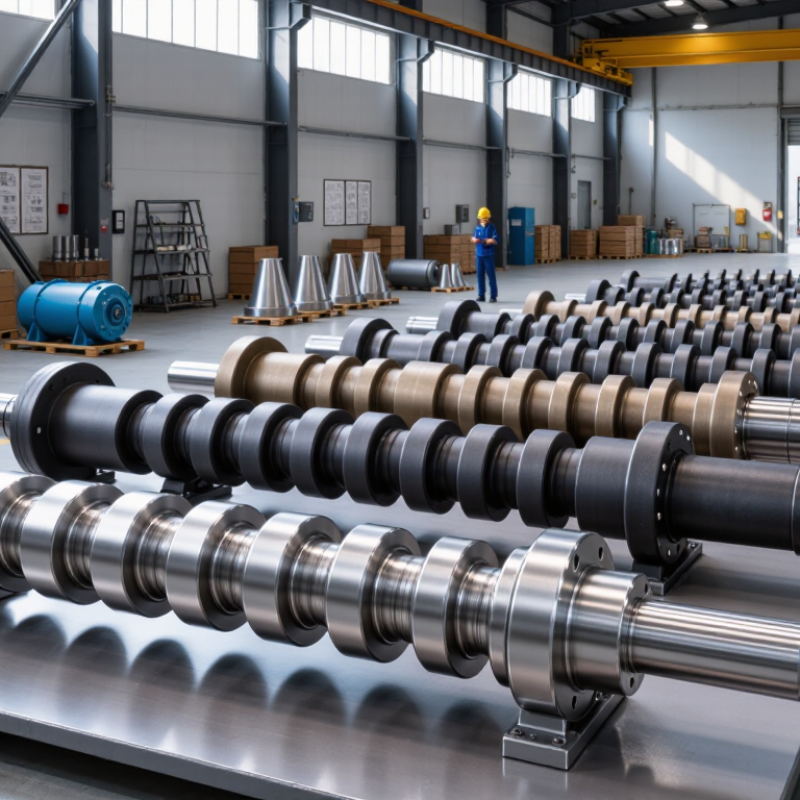
China Top Auger For Conveyor Manufacturers and Suppliers

Types of Augers Used in Conveyor Systems

China Top Auger For Conveyor Manufacturers and Suppliers

Types of Augers Used in Conveyor Systems

A conveyor auger moves bulk material through a rotating screw flight. Its design affects capacity, cleanliness, power use, and maintenance. Choosing the wrong type can create blockages or uneven feeding.

Standard shafted augers suit grain, powder, pellets, and other free-flowing materials. Their central shaft supports the flight during long horizontal runs. Ribbon augers have open flights, which improve mixing and reduce buildup around sticky products. They are useful for wet powders, slurries, and materials that tend to wrap around solid flights. Flexible augers use a spring-like flight inside a tube. They handle gentle conveying around bends, although excessive speed can damage fragile particles.

Shaftless augers work well with sludge, fibrous waste, and materials containing moisture. Without a center shaft, the open channel is easier to clean. Vertical augers lift materials upward in compact spaces, but they require careful speed and feed control. Tubular augers contain dust more effectively than open trough designs. This matters in enclosed processing areas.

In practical installations, pitch, flight diameter, angle, and motor torque must match the material. Moisture changes flow behavior. Dust changes everything. We once underestimated residue buildup near a discharge point, and cleaning took longer than expected. That mistake showed why inspection access matters as much as conveying capacity. Engineers should also check wear zones, seals, inlet loading, and emergency access before production begins.

China Top Auger For Conveyor Manufacturers and Suppliers - Types of Augers Used in Conveyor Systems

This chart compares common auger conveyor configurations by typical suitability for enclosed conveying, sticky materials, vertical movement, and long-distance conveying. Scores range from 1 to 5, where 5 indicates strong suitability. Actual performance depends on material properties, screw diameter, pitch, speed, inclination, and system design.

Key Features of China’s Auger Conveyor Manufacturers

China’s auger conveyor manufacturers focus on practical designs for powders, granules, and short-distance bulk transfer. Their equipment often uses carbon steel or stainless steel frames. Stainless steel suits humid, hygienic, or corrosion-sensitive processing areas. A welded screw flight can handle steady material movement with fewer interruptions. Small details matter.

Experienced suppliers normally adjust the screw diameter, pitch, length, and inlet shape to match the material. Fine powder may need a slower rotation speed and sealed housing. Sticky materials can require wider clearances to reduce buildup. Gearboxes should provide stable torque during starting and stopping. In factory inspections, access covers and removable sections make cleaning much easier. However, some designs still prioritize price over convenient maintenance. That trade-off deserves careful review.

Reliable manufacturers usually provide drawings, load data, motor specifications, and inspection records before production. They may test rotation, vibration, weld quality, and discharge consistency. Buyers should ask about shaft alignment and bearing protection. These parts often decide service life. Spare seals, bearings, and couplings should be available with clear replacement instructions. Installation support is another useful feature, especially for inclined conveyors. A technically correct machine can still perform poorly if the feeding rate is unstable. Suppliers with engineering experience will discuss this risk instead of promising perfect results.

How to Evaluate Auger Conveyor Suppliers in China

How to Evaluate Auger Conveyor Suppliers in China

China’s auger conveyor market offers many capable manufacturers, but catalog pictures prove little. MarketsandMarkets’ 2024 Conveyor System report forecasts the market to grow from about USD 10.6 billion in 2023 to USD 13.9 billion by 2028. This growth increases supplier choices and quality differences. Request drawings, material certificates, weld samples, and references for similar bulk materials. Ask whether the supplier has tested your actual powder, granules, or sticky mixture.

Capacity claims need careful checking. Confirm throughput in kilograms per hour, screw diameter, pitch, speed, incline, and bulk density. A supplier quoting only “maximum capacity” is not giving enough information. Insist on a witnessed factory acceptance test. Measure feed rate, motor current, noise, vibration, and discharge consistency. Small details matter.

Inspect the drive system, shaft support, flight thickness, seals, inspection covers, and emergency-stop design. Stainless steel selection should match moisture, abrasion, and cleaning chemicals. The International Energy Agency reported in 2023 that electric motor systems consume about 53% of global electricity. Therefore, compare motor efficiency and operating current, not only purchase price. Verify quality procedures, traceability, spare-parts availability, and response times. ISO certification helps, but it does not replace process evidence. I have seen polished factories miss basic dimensional checks. That remains a useful warning.

Manufacturing Standards and Quality Control Practices

China’s leading auger conveyor manufacturers rely on controlled production rather than attractive specifications alone. Engineering teams review material selection, conveying capacity, shaft strength, and operating temperature before fabrication. Carbon steel and stainless steel components should have traceable certificates. Each certificate must match the production batch.

Quality control begins with incoming inspection. Technicians check plate thickness, shaft diameter, flight pitch, and surface condition. Welds receive visual inspection and, where necessary, non-destructive testing. Critical dimensions are recorded against approved drawings. Calibrated tools are essential. A worn caliper can quietly create expensive alignment problems.

Assembly checks include bearing fit, screw rotation, gearbox alignment, and protective guarding. Finished conveyors should undergo unloaded and loaded trials. Inspectors listen for abnormal vibration and measure noise, current, and temperature. Moisture resistance and coating adhesion also deserve attention in demanding environments. Documentation should include inspection records, test results, corrective actions, and product identification. This supports reliable traceability for suppliers and buyers.

No inspection system is flawless. A rushed measurement can still pass unnoticed. Experienced factories reduce this risk through sampling plans, operator training, and independent review. Standards may follow applicable national, ISO, or destination-market requirements. However, paperwork cannot replace practical testing. A conveyor that looks precise on a table may behave differently after hours of material flow. Continuous feedback from installation sites helps manufacturers revise drawings, improve tolerances, and strengthen future quality controls.

Applications and Selection Criteria for Auger Conveyors

Auger conveyors suit controlled movement of powders, granules, and small bulk materials.

Common applications include flour, grain, animal feed, cement, ash, and recycled process material. They work well beneath silos, hoppers, mixers, and bagging lines.

A 2024 MHI Annual Industry Report found that 88% of supply-chain professionals consider technology and innovation important or very important. This supports smarter conveyor selection, but automation cannot correct poor mechanical sizing.

Material behavior should guide the design.

Check bulk density, moisture, particle size, temperature, abrasiveness, and flowability. Sticky powder may bridge above the flighting. It happens more often than a catalog suggests.

CEMA’s technical guidance identifies diameter, pitch, rotational speed, and loading level as key capacity factors. Inclined conveyors usually lose capacity and require greater power.

For food applications, choose accessible surfaces, suitable seals, and cleaning-friendly construction. For abrasive solids, consider replaceable liners and hardened contact areas.

Variable-speed drives help manage fluctuating feed rates, although they add control and maintenance complexity. Field measurements remain essential.

A laboratory flow test may not represent material after storage, vibration, or humidity exposure. Specify torque, startup load, discharge arrangement, and inspection access before ordering.

Small omissions can create oversized motors, unstable feeding, or frequent blockage.

FAQS

How can I judge an auger conveyor supplier beyond catalog pictures?

Request engineering drawings, material certificates, weld samples, and references for similar bulk materials. Photos can mislead. Ask for evidence.

What capacity information should a supplier provide?

Confirm kilograms per hour, screw diameter, pitch, speed, incline, and bulk density. “Maximum capacity” alone is incomplete. Details matter.

Should the supplier test my actual material?

Yes. Ask them to test your powder, granules, or sticky mixture. Material behavior can change discharge consistency. Do not assume.

What should a factory acceptance test measure?

Witness feed rate, motor current, noise, vibration, and discharge consistency. Use loaded and unloaded trials. Small faults become visible.

Which conveyor components deserve close inspection?

Check the drive system, shaft supports, flight thickness, seals, covers, and emergency-stop design. Inspect guarding carefully. It protects people.

How should stainless steel selection match operating conditions?

Match the steel to moisture, abrasion, temperature, and cleaning chemicals. A shiny surface is not enough. Selection can still be wrong.

How can I compare motor efficiency and operating costs?

Compare motor efficiency and operating current, not only the purchase price. Measure current during realistic loading. Cheap equipment may consume more.

What quality records should a reliable supplier provide?

Request incoming inspection records, dimensional checks, weld results, test data, and corrective actions. Certificates should match production batches. Paperwork needs verification.

Does quality certification guarantee conveyor performance?

No. Certification supports confidence but cannot replace practical testing. A polished factory can miss basic dimensional checks. That warning matters.

What warning signs suggest weak manufacturing control?

Watch for missing traceability, worn measuring tools, unclear drawings, rushed inspections, and poor spare-parts support. Ask about response times. I may be overly cautious.

Conclusion

China’s Auger For Conveyor manufacturers offer a wide range of conveyor solutions designed for the reliable movement of powders, grains, aggregates, and other bulk materials. Common types include horizontal, inclined, flexible, tubular, and shaftless augers, each suited to different material characteristics, conveying distances, and installation environments. Key features often include durable construction, customizable dimensions, efficient motor systems, enclosed conveying paths, and options for dust control and easy maintenance.

When evaluating suppliers in China, buyers should review production capabilities, technical expertise, material quality, testing procedures, and after-sales support. Manufacturing standards, dimensional inspections, weld quality checks, load testing, and operational trials are important indicators of product reliability. Auger conveyors are widely used in agriculture, food processing, chemical production, construction materials, and waste handling. Selection should consider throughput, material density, moisture, abrasiveness, temperature, inclination, cleaning requirements, and available space to ensure safe, efficient, and long-lasting performance.

Liam

Liam

Liam is a dedicated marketing professional with a profound expertise in the industry, where he excels at highlighting the unique advantages of our core products. With a keen understanding of market trends and consumer needs, Liam frequently updates our company’s professional blog, providing......