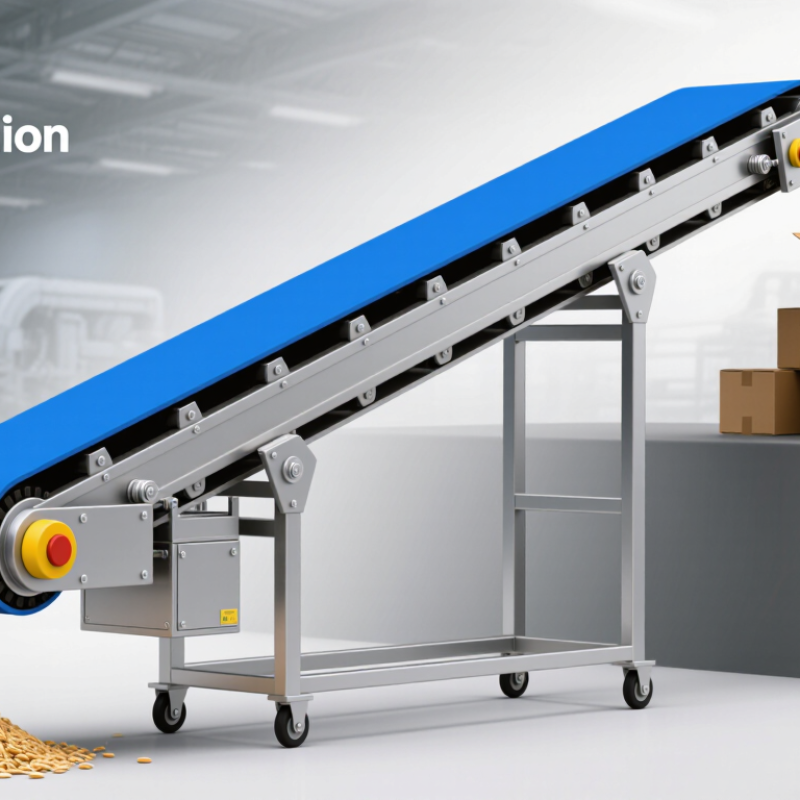
An Inclined Belt Conveyor Manufacturer designs and supplies systems that move materials between different elevations. These conveyors are used in food processing, packaging, recycling, agriculture, and other production settings. Their job may sound simple. The engineering is not.
A dependable system starts with the material itself: its size, weight, moisture, temperature, and tendency to slide or spill. These details influence belt texture, cleat height, sidewalls, drive capacity, and the conveyor’s incline. A steep angle may save floor space, but it can also affect product stability and throughput. There is no single angle that suits every application. That distinction matters.
Manufacturers may also help specify frame dimensions, loading points, discharge height, controls, and access for cleaning or maintenance. For example, loose grain and packaged cartons place different demands on a belt. A compact conveyor with raised cleats might suit one task, while a smoother belt could be better for another. The right choice depends on real operating conditions, not a catalogue image alone.
When comparing suppliers, ask for clear specifications and evidence that the proposed design matches your material and production rate. Check how belt replacement, tension adjustment, and routine inspection will work on site. A conveyor can look right on paper and still be awkward to maintain. It is worth admitting that early. A thoughtful Inclined Belt Conveyor Manufacturer should explain trade-offs, identify missing information, and avoid promising performance without enough application details.
An inclined belt conveyor manufacturer is a company that designs and builds equipment to move materials between different heights. Its work goes beyond fitting a belt to a frame. Engineers consider the product’s weight, surface, moisture, loading rate, and required incline. A carton behaves differently from loose grain or damp aggregate. Small details matter.
The manufacturer selects components such as the belt, drive, rollers, side guards, and loading chute. It may also provide installation guidance and maintenance instructions. Belt grip and incline angle need careful attention: an excessive slope can cause material to slide backward or spill. Practical testing with the intended load can reveal problems that drawings miss. It is not always perfect on the first run.
A reliable manufacturer should explain design limits and ask how the conveyor will be used. Buyers can request drawings, rated capacity, belt specifications, and cleaning guidance before ordering. These details help confirm whether the system fits the actual site, including floor space and discharge height. Even a well-sized conveyor may need adjustment after installation, especially if the material varies in size or moisture. Regular inspection of belt tracking, tension, and wear helps identify issues before they interrupt operation.
An inclined belt conveyor manufacturer designs and builds systems that move materials to a higher level. This chart shows the theoretical vertical rise of a 10-metre belt at different angles, calculated as belt length × sin(angle). Actual conveyor designs depend on the material, belt type, and site requirements.
An inclined belt conveyor lifts materials between different floor levels or process stages. At the loading point, workers or feeders place items on a moving belt. A drive pulley turns the belt, while rollers support it along the route. Friction helps hold the load as it climbs. For loose or slippery material, cleats or sidewalls can reduce rollback and spillage. The right belt, incline, and speed depend on material size, moisture, weight, and flow rate. Small details matter.
The Conveyor Equipment Manufacturers Association’s Belt Conveyors for Bulk Materials explains how capacity depends on factors such as belt width, speed, and material characteristics. In practice, a damp load may behave differently from a dry one, so calculations need field checks. Real installations are rarely as tidy as diagrams.
MHI’s 2024 Annual Industry Report found that 55% of surveyed organizations planned to increase investment in supply-chain innovation, a trend that puts more focus on dependable material movement.
A manufacturer typically helps size the conveyor, select components, and position the loading and discharge points. Guards and accessible emergency stops also matter, especially near moving pulleys. Incline alone does not determine performance. An overloaded belt can slip, spill, or wear unevenly.
An inclined belt conveyor manufacturer designs and builds systems that move materials between different heights. The conveyor’s performance depends on how its parts work together. Belt width, incline angle, and material weight all affect the design. A steep path may save floor space, but it can also increase the risk of material slipping.
Key components include the belt, drive motor, pulleys, rollers, frame, and side guards. The belt carries the load, while the motor and drive pulley keep it moving. Rollers support the belt and help limit sagging. A rigid frame holds the conveyor at the required angle. Cleats or a textured belt can improve grip on loose items. The right choice depends on the material; damp, fine, or bulky loads behave differently. Small details matter. A guard that looks adequate in a drawing may not contain material during a real spill.
Tips: Check the belt surface and cleat spacing against the actual load. Keep transfer points easy to inspect and clean. Ask the manufacturer how belt tension, wear, and maintenance access were considered. These checks are practical, though they cannot replace testing with your specific material.
An inclined belt conveyor manufacturer turns a site requirement into a system that moves material uphill at a controlled rate. Design begins with the material, not just the incline. Engineers assess particle size, moisture, temperature, bulk density, and how steadily material arrives. They measure the available footprint and discharge height, then calculate belt speed and capacity. A steep incline may need cleats or sidewalls to limit rollback, but these features can complicate cleaning. Small details matter.
During fabrication, the frame and support points are built to handle the expected load without excessive movement. The belt, pulleys, rollers, and drive are selected to suit the operating conditions. Guards and access points also need practical placement, so routine inspection does not become awkward. Then comes testing. A loaded trial can reveal belt tracking problems, material spill, or unexpected vibration. Early estimates sometimes miss how damp material behaves, so adjustments may be needed before installation. Clear drawings, operating limits, and maintenance instructions help the site team use the conveyor safely and consistently.
An inclined belt conveyor manufacturer designs and builds equipment to move materials between different elevations. The figures below are general planning examples; final specifications depend on the material, layout, operating conditions, and safety requirements.
| Design or Build Stage | What the Manufacturer Evaluates | Typical Data or Considerations | Resulting System Feature |
|---|---|---|---|
| Application review | Material type, required throughput, loading method, discharge point, and operating schedule. | Capacity is commonly specified in kilograms per hour or tonnes per hour. Bulk-material calculations also consider bulk density and how consistently the material is fed. | A conveyor layout and preliminary capacity target suited to the process. |
| Incline and route planning | Vertical lift, horizontal distance, available floor space, access for cleaning, and transfer points. | Permissible incline depends on the material and belt surface. Many general-purpose applications use moderate inclines; steeper routes may require cleats, sidewalls, or other retention features. | A defined conveyor angle, length, and material-retention approach. |
| Belt selection | Material size, abrasiveness, temperature, moisture, oil exposure, and required grip. | Options may include smooth, textured, cleated, or sidewall belts. Belt materials and cover compounds are selected for the service conditions. | A belt configuration that supports traction, product containment, and expected wear life. |
| Capacity and speed sizing | Required flow rate, belt width, loading pattern, material profile, and incline. | Designers estimate material loading per unit of belt length and select a compatible belt speed. The usable capacity depends on both the belt and how the material behaves in operation. | A belt width and operating speed matched to the production requirement. |
| Frame and support design | Conveyor span, belt and material load, drive forces, installation environment, and support locations. | Structural members and supports are sized for the expected operating loads and deflection limits. Materials and finishes are chosen for the environment, such as washdown or outdoor service. | A stable frame with suitable supports, guarding provisions, and mounting points. |
| Drive and tensioning | Conveyor length, incline, payload, start-up conditions, duty cycle, and available power supply. | The drive is selected to provide the required torque and speed. A take-up arrangement maintains appropriate belt tension as the belt stretches or operating conditions change. | A motor, gearbox, drive pulley, and tensioning system suited to the load and duty. |
| Component integration | Material transfer, tracking, spillage control, cleaning, and connection to upstream or downstream equipment. | Typical components include pulleys, idlers or support rollers, scrapers, chutes, skirt seals, and belt-tracking adjustments. The exact package varies by application. | A coordinated system designed to carry and transfer material reliably. |
| Safety and controls | Access points, pinch and nip hazards, emergency response, guarding, and integration with plant controls. | Safety features are selected to meet applicable local requirements and the site’s risk assessment. Controls may include start/stop stations, interlocks, and belt-misalignment or overload monitoring. | Equipment with appropriate protective measures and operational controls. |
| Fabrication and assembly | Manufacturing drawings, component tolerances, weld quality, assembly sequence, and fit-up. | Frames and supports are fabricated to the approved design. Mechanical and electrical components are assembled and checked before shipment or installation. | A built conveyor ready for installation, commissioning, or further integration. |
| Testing and commissioning | Belt tracking, tension, drive operation, safety devices, and performance under operating conditions. | Checks may include no-load and loaded runs, inspection of transfers, and verification of controls and protective devices. | A system adjusted for the site and verified against agreed operating requirements. |
Inclined belt conveyors are used when goods must rise between floors, loading docks, mezzanines, or processing stages. Warehouses often move cartons and parcels uphill, while quarries and recycling plants handle heavier, abrasive materials. Food-processing lines may need washable belts and controlled discharge points. The application changes the design. A steep rise may need cleats or sidewalls to prevent rollback; loose grain behaves very differently from boxed products. Small details matter. Belt width, incline angle, speed, and peak load should be checked against the actual product, not just a catalog example.
MHI’s 2024 Annual Industry Report found that 55% of surveyed supply-chain professionals planned to increase investment in supply-chain innovation. This is not a conveyor-specific finding, but it signals why adaptable material handling matters. When selecting a system, ask the manufacturer to assess the product’s weight, shape, surface, and movement at start-up and stop. Also check cleaning access, guarding, noise, and maintenance space. A neat capacity calculation can still miss sticky residue or cartons shifting at the transfer point. That happens. Requesting a trial with representative loads can expose those weak spots before installation.
It moves materials between different floor levels or process stages. A drive pulley moves the belt, and rollers support it.
Belt width, speed, material weight, and flow rate all matter. Damp material may behave differently from dry material.
The belt, motor, pulleys, rollers, and frame work together. Cleats or a textured surface can improve grip.
They can reduce rollback and spillage with loose or slippery loads. They may also make cleaning harder.
Engineers assess material size, moisture, temperature, and bulk density. They also measure the available space and discharge height.
It can reveal belt tracking issues, spills, or unexpected vibration. Estimates can miss real material behavior.
Check belt wear, tension, guards, and transfer points. Keep inspection and cleaning access practical.
They help protect people near moving pulleys and belts. A tidy drawing is not enough. Real sites can be messier.
An Inclined Belt Conveyor Manufacturer designs and builds systems that move materials between different elevations in a controlled, continuous flow. As the belt travels uphill or downhill, its surface carries items from one point to another. Depending on the material and slope, features such as cleats, sidewalls, or a textured belt can help keep loads stable and reduce slipping or spillage.
Each system is shaped by components including the belt, frame, drive motor, rollers, and loading and discharge points. Manufacturers select and arrange these parts according to the material’s weight, size, handling needs, available space, and required capacity. Inclined belt conveyors are used in settings such as production lines, packaging areas, warehouses, and bulk-material handling operations. Choosing a suitable system involves considering the incline, operating conditions, maintenance access, and how the conveyor will connect with other equipment.